How to reduce reputational risk related to undesirable content in large corporate structures
Audio version on our Youtube channel: Here
Reputation - a capital you cannot buy
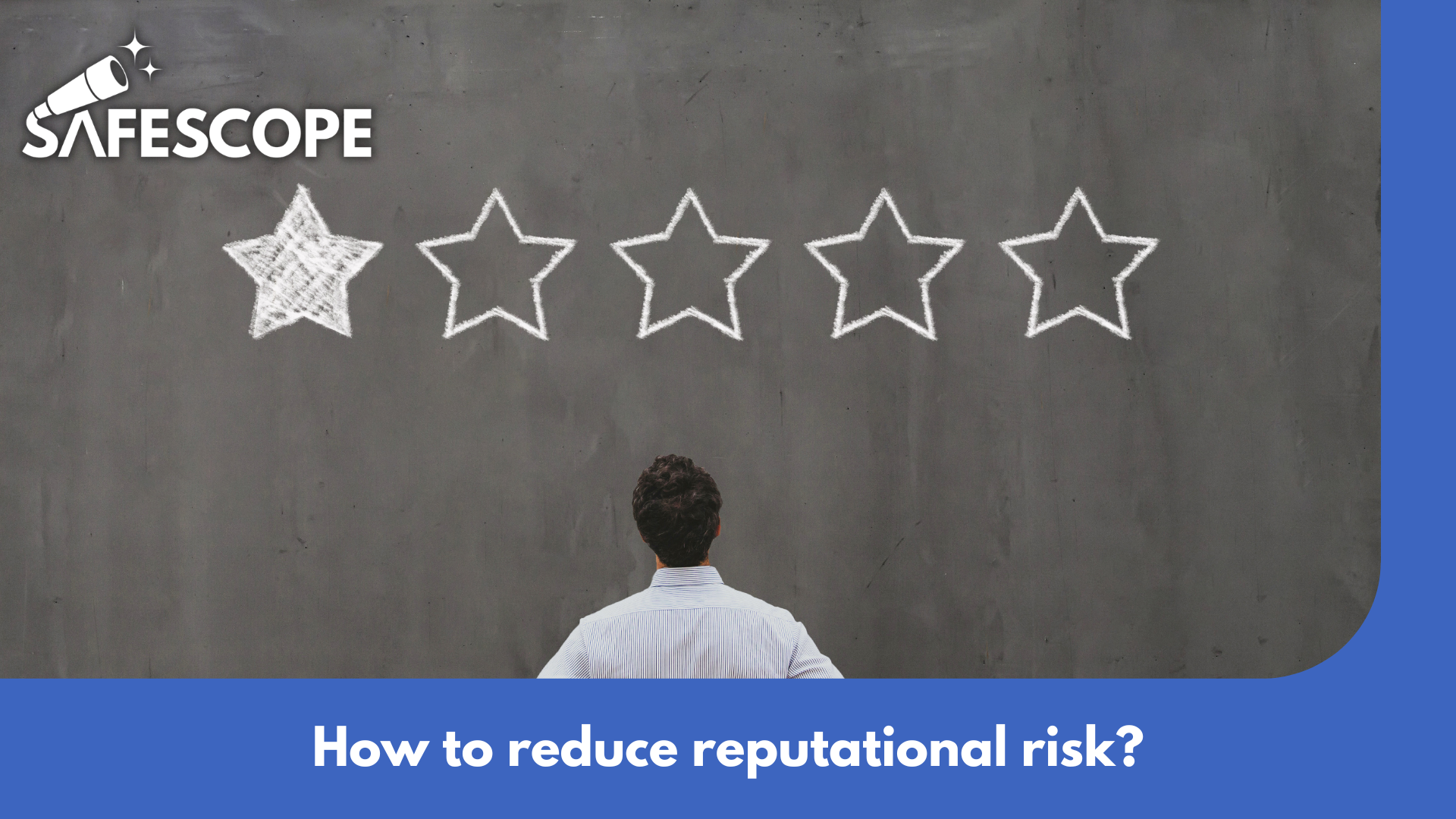
Reputation is the foundation of trust in a company. It determines whether customers remain loyal, partners sign contracts, and employees stay with the organization long-term. Financial losses can be recovered, but once damaged, reputation is much harder to rebuild.
A single careless action or unfortunate incident in the digital space can have enormous consequences. A screenshot from an employee’s monitor showing undesirable content, or a document accidentally uploaded to an unsecured portal, can spread across the Internet in no time, triggering a flood of questions from the media and business partners and sometimes even regulators.
What is reputational risk, and why does it matter for your company?
Reputational risk is the threat that a company’s actions, its employees, or the content it is associated with could negatively influence how customers, partners, or the public perceive it.
In practice, this may include:
• Association of the brand with undesirable content when company IPs or devices are linked to suspicious online activity.
• Leakage of internal information onto unsecured platforms.
• Failure to respond to incidents involving harmful or unethical content (silence in the face of harmful content or disinformation can be interpreted as tacit approval).
Why is reputational risk so serious?
In today’s digital age, where information spreads instantly, one incident can trigger a cascade. An accidentally opened website, a data leak tied to a controversial source, or a screenshot revealing inappropriate content are situations that can reach the public and media within minutes.
Unlike financial losses, damage to reputation spreads quickly and is difficult to repair. Once trust is lost, it often takes years to regain. In a large organization, even a single incident can resonate widely in the media, trigger regulatory scrutiny, and weaken relationships with key stakeholders. And the larger the organization and the more people using its network, the higher the risk of such events.
In environments such as government agencies, banks, or large corporations, tolerance for such incidents is practically zero. Partners and clients expect not only security but also flawless transparency and accountability.
Moreover, undesirable content is no longer limited to pornography or violence. Increasingly, it involves disinformation, extremist ideologies, or seemingly neutral sites that contain controversial messaging inconsistent with company policy. The problem is not always intentional and sometimes a single accidental click or a search engine suggestion is enough.
The consequences can be severe:
• Partner concerns about security - even a single incident can undermine confidence in the organization and raise doubts about its ability to protect data or maintain operational stability.
• Questions from business partners - after an incident, partners may demand detailed explanations, audit reports, or additional security procedures, creating extra operational and financial burden.
• Risk of media crises or legal liability - such situations can attract media attention, and if data protection regulations or client contracts are violated, the organization may face legal consequences, financial penalties, reputational damage, and long-term weakening of market position.
How to reduce reputational risk
Mitigating threats is not just about blocking sites deemed risky. It is a strategic process that combines technology, procedures, and organizational culture. Companies need technology that acts as a filter and blocking harmful content while allowing access to what is truly necessary for work. This is exactly how Safescope works: it categorizes content in real time, blocks what could damage reputation, and preserves freedom where there is no risk. This balance cannot be achieved through bans alone. With Safescope, protection becomes both flexible and effective.
But technology is only part of the puzzle. Effectively protecting reputation in a large organization also requires clear rules, transparent procedures, and a responsible work culture. In practice, this means:
1. Proactive brand protection - using intelligent filtering and monitoring tools like Safescope to separate undesirable content without hindering access to valuable resources.
2. Clear incident response procedures - preparing the company for a reputational crisis: who communicates with the media, how partners are informed, and what actions IT takes.
3. Transparency with stakeholders- security reports and audits build trust and show that the company takes the issue seriously.
4. Culture of digital responsibility - educating employees that each of them is part of the organization’s reputation. One click can have global consequences.
Reputation as a strategic advantage
Protecting reputation is not just about avoiding crises. A strong reputation directly benefits business: it helps attract new customers, increases loyalty, draws talent, and provides leverage in discussions with partners or investors. Companies perceived as responsible and transparent have a higher chance of long-term success because they build trust, which is the key currency in business relationships. Investing in reputation protection is therefore not a cost but a strategic component of organizational development.
FAQ: Common questions about reputational risk
Can reputational risk be completely eliminated?
No, but it can be significantly reduced. The key is a combination of technology, procedures, and organizational culture.
Do these measures limit employee freedom?
Not if implemented transparently and respectfully. The goal is to protect the common good, which is your company’s reputation and not to limit anyone or anything.
Does this make sense in remote work environments?
Yes. Safescope allows consistent policies regardless of location - office, home, or business travel.
Summary
Reputational risk is not an abstract concept in reports. It is a real threat that can impact any company, regardless of industry. In the digital era, reputation is a currency that can be lost in a single incident. That’s why investing in protective technology, transparent procedures, and a culture of responsibility is essential.
A strong reputation is not just a shield against crises - it is a competitive advantage.
Don’t wait for a crisis to hit your brand. See how Safescope can help reduce reputational risk and build your own competitive advantage.